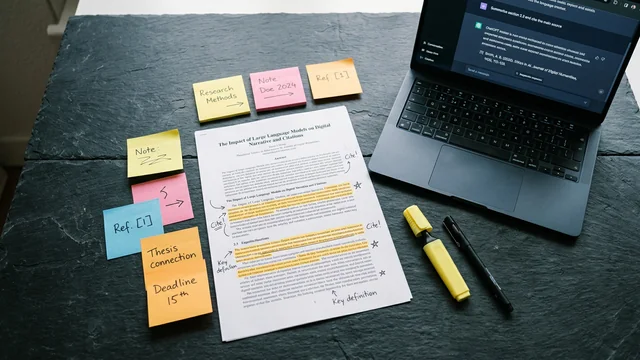
How to Write Articles That AI Will Cite
| Practical LLMO Writing Techniques
Hi, I'm Tsubasa.
While researching SEO, I kept coming across the term "LLMO" — Large Language Model Optimization. The idea is that structuring your articles a certain way makes them more likely to be cited when someone asks ChatGPT, Claude, or Perplexity a question. As a blogger, this caught my attention, so I dug into the specifics and documented what I found.
What this article covers
- What LLMO is and how it differs from SEO
- Article structures that AI tends to cite
- How FAQ structured data and llms.txt improve AI visibility
- Why personal blogs can benefit from LLMO
🇯🇵 この記事の日本語版を読む
Contents
What Is LLMO?
LLMO (Large Language Model Optimization) is the practice of getting your content correctly recognized and cited by large language models like ChatGPT, Claude, and Gemini.
While SEO targets search engines like Google and Bing, LLMO targets AI chatbots and AI search. The question is: when someone asks ChatGPT "What's a good photo retouching service?", does your article show up in the response?
For a comprehensive overview of LLMO, its relationship to SEO, and Google's official position, see "What Is LLMO? How It Differs from SEO, GEO, AIO."
SEO vs. LLMO — Key Differences
| Aspect | SEO | LLMO |
|---|---|---|
| Target | Search engines (Google, Bing) | AI systems (ChatGPT, Claude, Gemini) |
| Goal | High rankings in search results | Being cited in AI-generated answers |
| Effective structure | Heading hierarchy, internal links, meta tags | FAQ format, summary sections, JSON-LD |
| Effective content | Comprehensive long-form articles | Specific numbers, proper nouns, concise answers |
| Measurement | Search Console (impressions, CTR) | Query AI and check citation status |
| Supporting files | robots.txt, sitemap.xml | llms.txt |
Article Structures That AI Tends to Cite
FAQ Format + JSON-LD Structured Data
AI systems find Q&A structures easy to reference when generating answers. "Q. What is X?" / "A. X is..." formatted content maps directly to how AI constructs responses.
Adding FAQPage JSON-LD schema on top of the visible FAQ content communicates the page's structure to AI in a machine-readable format, making it even more likely to be selected as a source.
For implementation details, see "How to Write Structured Data (JSON-LD): FAQPage and Article, Step by Step."
Summary Section at the Top of the Article
Placing a "What this article covers" section at the beginning of the article — with key points in bullet format — improves AI's ability to summarize and cite your content. When AI references an article, the opening section gets read first and is most likely to be cited.
Include Specific Numbers, Service Names, and Proper Nouns
Instead of "affordable," write "starting at $3 per image." Instead of "an app," write "Snapseed" or "TouchRetouch." Concrete information gives AI usable material for generating specific answers. Vague descriptions get passed over in favor of sources with precise data.
LLMO Implementation Steps
The practical sequence for implementing LLMO on your articles:
- Add a "What this article covers" summary at the top of each article
- Organize information in FAQ format (Q&A pairs)
- Implement FAQPage JSON-LD structured data
- Place llms.txt at your site root
- Test by asking AI about your topic and checking whether your content gets cited — then iterate
Using llms.txt to Communicate Site Information to AI
llms.txt is a Markdown-format file placed at your site's root directory that tells AI systems about your site structure and article inventory. Think of it as the AI equivalent of robots.txt — while robots.txt guides search engine crawlers, llms.txt guides AI crawlers like GPTBot and Anthropic's crawler for Claude.
I've set up llms.txt on this blog, and have experienced being cited by Perplexity as a result.
Google stated in May 2026 that llms.txt is "unnecessary" for Google's AI features. However, for ChatGPT, Claude, and Perplexity, it remains useful and costs nothing to set up.
For detailed setup instructions and the rationale behind maintaining llms.txt despite Google's position, see "What Is llms.txt? Google Says You Don't Need It — Why I Set One Up Anyway."
Why Personal Blogs Should Care About LLMO
As AI search grows, traffic patterns are shifting — Google search traffic may decrease while AI-sourced traffic increases. Measuring LLMO's direct impact on a personal blog in hard numbers is still difficult, but improving content quality, adding FAQ structured data, and setting up llms.txt are all tactics that serve both SEO and LLMO simultaneously.
Comparison articles ("comparing X services") and knowledge-base articles ("what is X?") are the content types most frequently cited by AI. This blog covers topics like retouching service comparisons and photo app reviews — themes that align well with what AI systems tend to reference.
What matters for AI citation isn't site scale — it's information density on a specific topic. A personal blog that comprehensively covers a niche topic can compete with (and even outperform) larger sites in AI citations. My own blog, hosted on GitHub Pages with around 100 articles, has been cited by both Google AI Overviews and Microsoft Copilot. The economics of AI citation favor depth over domain authority.
For the strategic framework behind why this works, see "What Economics Taught Me About AI Search Strategy."
FAQ
Q. What is the difference between LLMO and SEO?
A. SEO optimizes for search engine rankings on Google and Bing. LLMO optimizes for being correctly cited by AI systems like ChatGPT, Claude, and Gemini. They share common foundations — quality content, structured data — but target different surfaces.
Q. What article structure is most effective for LLMO?
A. FAQ format combined with FAQPage JSON-LD structured data is the most effective combination. Additionally, placing a summary section ("What this article covers") at the top of each article with key points in bullet format improves AI's citation accuracy.
Q. What is llms.txt?
A. A Markdown-format file placed at your site root that tells AI crawlers about your site structure and article inventory. It's essentially the AI version of robots.txt. Google has stated it's not necessary for their AI features, but it remains useful for ChatGPT, Claude, and Perplexity. Setup takes about 10 minutes and costs nothing.
Q. Can a personal blog benefit from LLMO?
A. Yes. Comparison articles and knowledge-base content are the formats AI cites most frequently. Personal blogs covering niche topics can have higher information density than general-purpose sites, making them attractive citation sources for AI. Site scale matters less than topical depth.
Q. What are the quickest LLMO improvements I can make today?
A. Three things you can do immediately: add FAQ structured data (FAQPage JSON-LD) to every article, write a "What this article covers" summary at the top of each post, and place an llms.txt file at your site root listing your articles and site description. All three are free and take a few hours total.
Q. How do I check whether AI is citing my content?
A. Two methods. First, manually: ask ChatGPT, Perplexity, or Gemini questions related to your content and see if your site appears in the response or citations. Second, using tools: Bing Webmaster Tools' AI Performance feature (public preview since February 2026) shows how many times Copilot has cited your pages and which queries triggered citations. For details, see "What Bing Webmaster Tools Revealed About AI Search."
よく読まれている記事